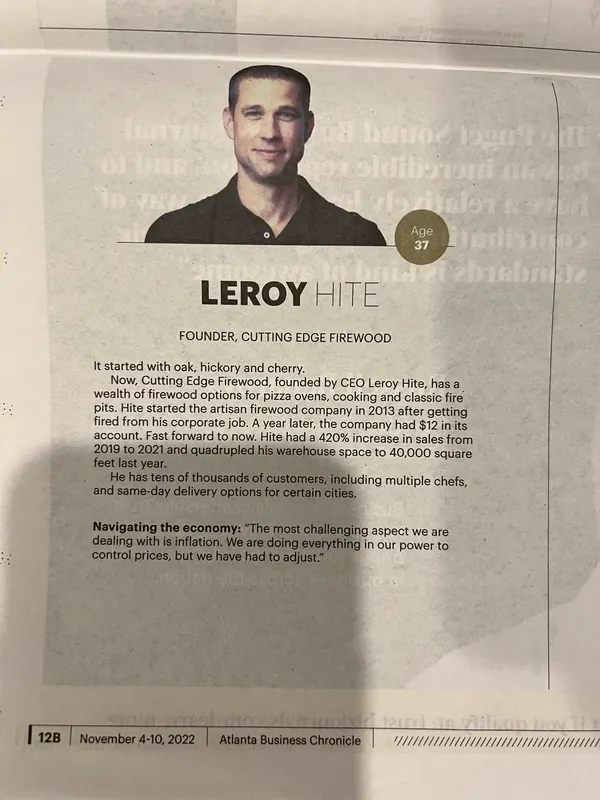
Leroy Hite took the most ordinary product in America and made it a luxury. Cutting Edge Firewood became the world's first luxury firewood company, with 59,000 customers in all 50 states, firewood burning in the Oval Office, and an exit in 2024. Now he's building what's next.
Cutting Edge Firewood has been featured on TODAY, Fox and Friends, Netflix, Hulu, Fortune, Robb Report, Garden and Gun, Food and Wine, Southern Living, The Morning Show and Inc.
When Leroy started, firewood sat outside for a year, rotting, sometimes with mushrooms growing out of it. He kiln-dried it, hand-picked every piece, packed it in boxes customers compared to Apple's, and delivered it like a five-star hotel. When he entered the industry, firewood was a commodity. When he exited, it was a status symbol.
The Story
From $12 in the bank to the Oval Office.
The short version is the world's first luxury firewood brand. The real version is 100-hour weeks, maxed-out credit cards, and one bet after another that almost didn't work.
Three guys just out of college
50–60
people hired to bag firewood for Kroger's stores across the Southeast
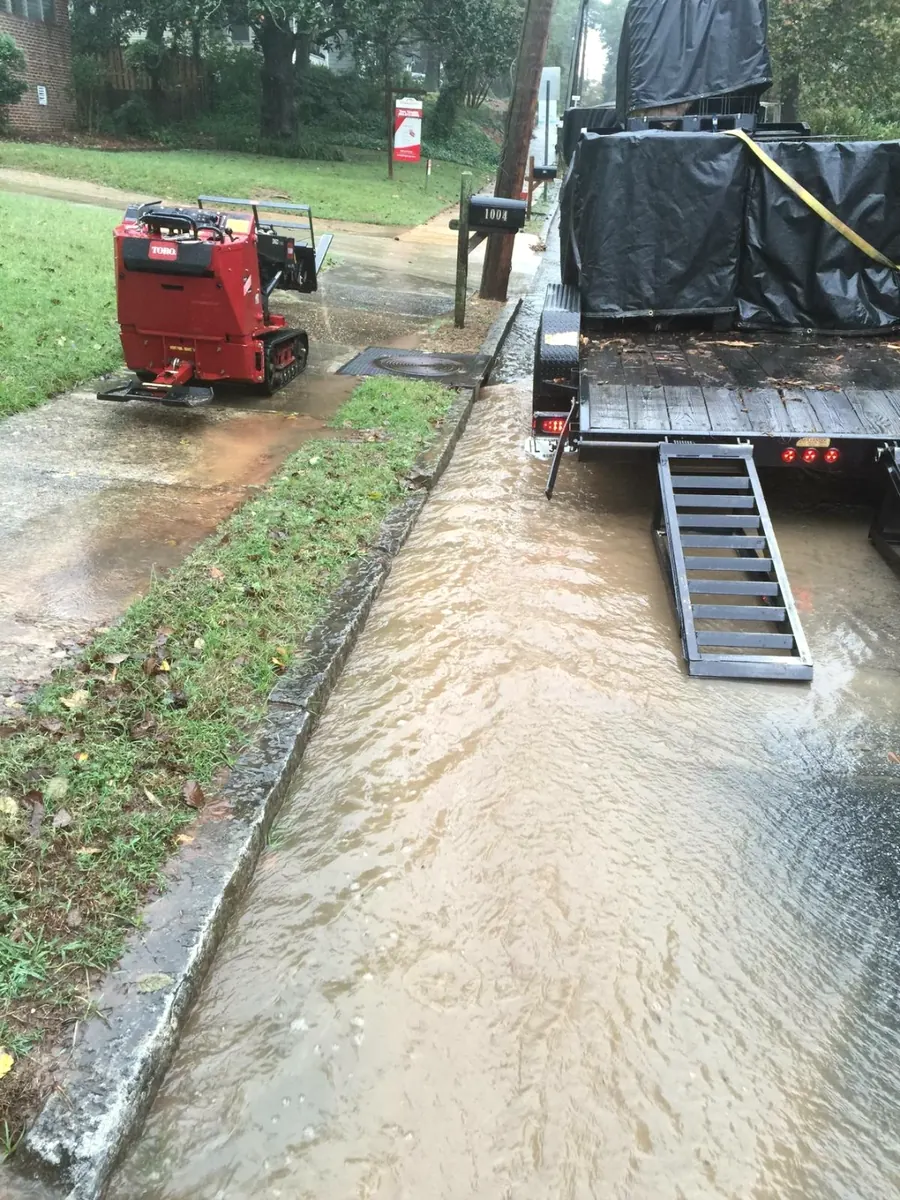
The mini skid steer on a delivery.A delivery in the pouring rain.
Late July 2014
$12
in the bank, with more than $150,000 in debt
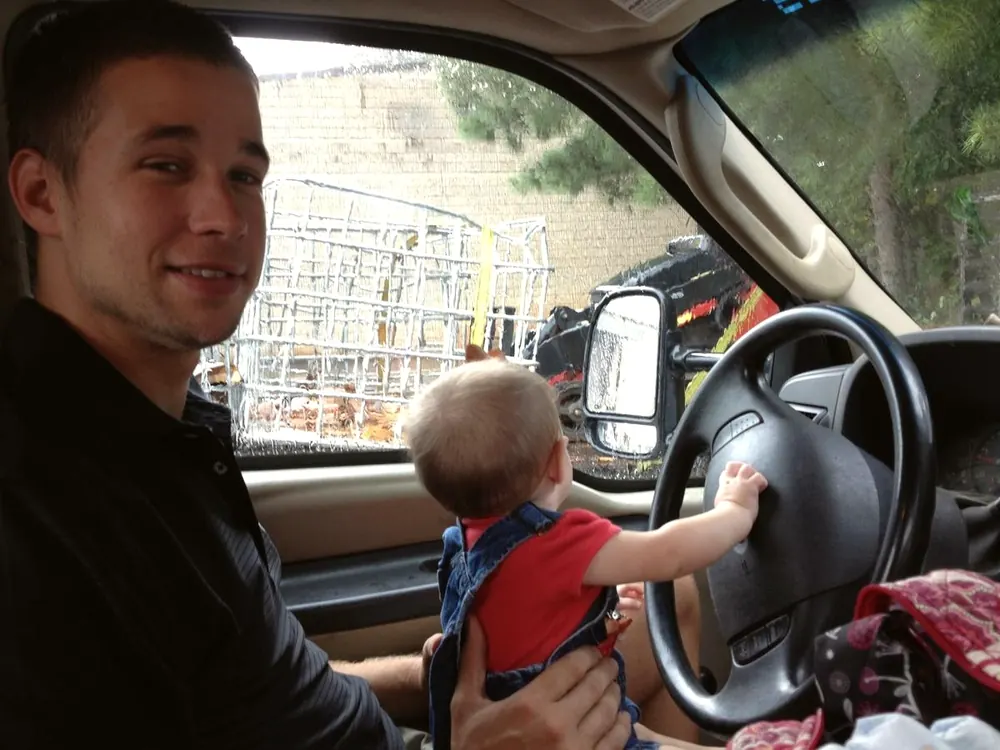
In the truck, with his daughter at the wheel.
The warmest winter on record
0
bags sold to Publix, Kroger, or anyone else
Every bank said no
Sold
their house, to put the money into the business
U.S. Patent 10,829,140
Firewood delivery rack system and method
2 hrs15 min
per delivery, before and after the rack
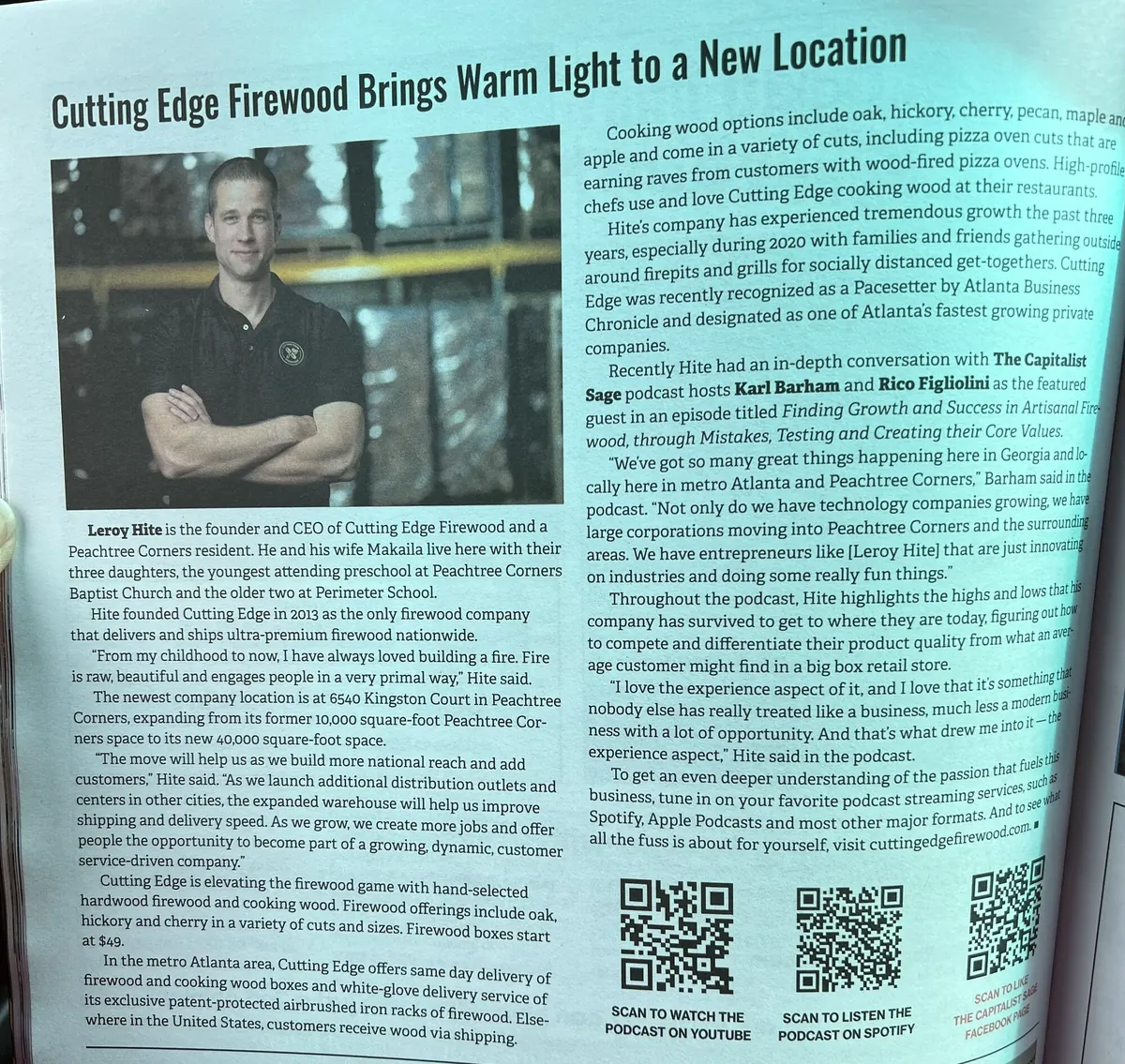
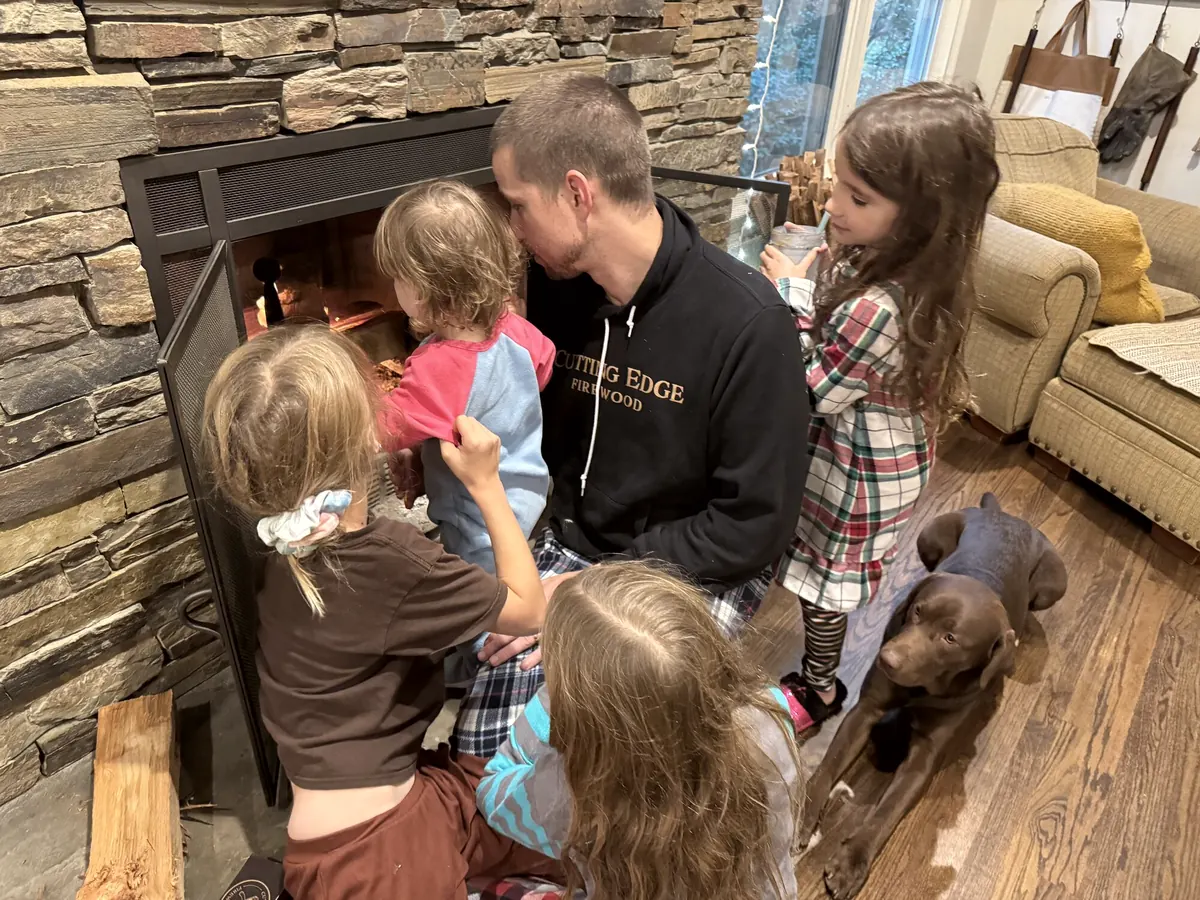
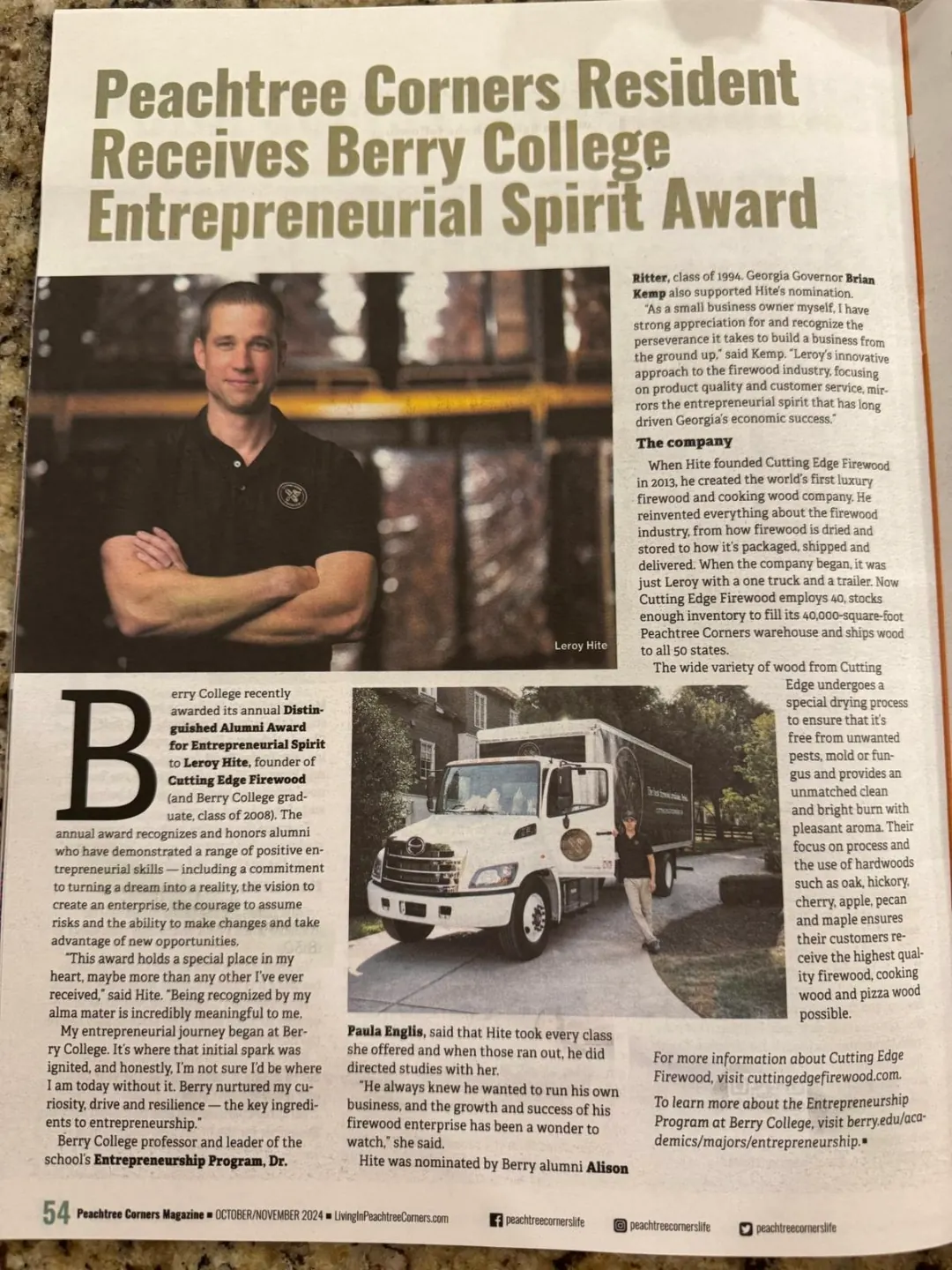
Peachtree Corners Magazine on the company's new location, 2021.At home with his four daughters.Peachtree Corners Magazine on his Berry College award, 2024.Hosting Ritz-Carlton co-founder Horst Schulze for a fireside chat, 2026.
2007–08
01 / 13
Three guys just out of college
50–60
people hired to bag firewood for Kroger's stores across the Southeast
01 · 2007–08
The first try
Leroy met his wife, Makaila, when they were teenagers working together at Chick-fil-A. They married in 2007, during his junior year at Berry College in Rome, Georgia. Berry had just started an entrepreneurship program, and Leroy used it to launch a few small businesses.
That same year, two of his friends started a firewood company and asked Leroy to run its operations. Tree companies dropped logs on their lot in Mableton, just outside Atlanta. Leroy spent the summer cutting and splitting them into firewood during the hottest summer on record in Atlanta. That winter, when people actually buy firewood, they sold it to homeowners around the city.
Then his friends had a bigger idea: bid on Kroger's firewood business for its stores across the Southeast. The bidding happened online, the lowest price won, and no one checked whether the bidders could actually supply the stores. They put in the lowest price and won. To fill the orders, they brought in an investor, took out loans, bought a $150,000 machine that turns whole trees into firewood, and hired 50 to 60 people to bag wood on an assembly line. It was impressive for three guys just out of college, but they were in over their heads. They had priced the deal so low that they lost money on every bag, and they still couldn't keep up. They had to tell Kroger they couldn't supply everything it needed.
To salvage the company, they built a homemade kiln, a large oven that dries firewood, out of the back of a tractor trailer, and started selling to homes. Leroy came up with a way to deliver the smaller loads most homeowners actually wanted, using a truck, a trailer, and a mini skid steer. A mini skid steer is a small loader that looks like a riding lawnmower crossed with a Bobcat. The company started making some money. But firewood is a winter business, and when summer came, sales dried up. Leroy couldn't pay himself, Makaila was laid off from her job, and they had no income at all. They made the hard decision to shut the company down.
Leroy took a job at Chick-fil-A, thinking he might become an operator, the person who runs his own Chick-fil-A restaurant. After a year of long hours and little pay, with him and Makaila going deeper into credit card debt, he realized it wasn't the path for him.
He applied everywhere. A recruiter at Enterprise Rent-A-Car believed in him and kept pushing until he was hired at a branch in Suwanee, outside Atlanta. Leroy turned out to be good at sales. He was the top salesperson in his region several times and was promoted to assistant manager, then branch manager in Dunwoody. There he worked up to 70 hours a week, managing as many as ten employees and $2.5 million worth of cars. He called it business boot camp. From there, Georgia-Pacific, the paper and building products company, hired him into a corporate job.
Through all of it, the idea of doing firewood the right way wouldn't leave him alone. Whenever someone mentioned firewood, something welled up inside him. He prayed for God to take the idea out of his head so he could focus on his career. When a flatbed truck came through the Chick-fil-A drive-thru, he'd catch himself wondering how much firewood would fit on the back.
Meanwhile, he was still driving the car he'd been given at 17: a 1993 Geo Prizm from his brother-in-law's parents. By 2013 it had 266,000 miles on it. He and Makaila had a running joke that when it finally died, he would buy a pickup truck and start a firewood business on the side.
The mini skid steer on a delivery.
03 · 2013
Fired on a Monday
In 2013, the Geo Prizm broke down for good. The repair would have cost $5,000, far more than the car was worth, so Leroy sold it for scrap. That Saturday, while Makaila was at a baby shower, he spent the entire day fasting, praying, singing hymns, and listening to sermons. By the end of the day, he was convinced God was calling him to start the firewood business on the side. When Makaila got home, they talked it through and agreed on a plan: he would keep his job at Georgia-Pacific and build the business in his spare time.
On Monday morning, Georgia-Pacific fired him on the spot, saying he wasn't a good fit.
“Apparently this isn't going to be part-time.”
The firewood business was now the family's only hope for income, and it didn't exist yet. Leroy and Makaila had just paid off all their debt except the mortgage, so they had no savings to draw on. He applied for as many credit cards as he could get. He took out a personal loan to buy a used F-350 flatbed truck and a 20-foot trailer, both of which Makaila found on Craigslist. He took out another loan for a mini skid steer to unload wood at customers' homes. He still needed dry firewood to sell, so he approached a firewood company near Mableton that had a kiln. The lot manager took a liking to him and agreed to sell him wood. Leroy named the new business Cutting Edge Firewood.
A delivery in the pouring rain.
04 · 2013–14
The first season
Finding customers turned out to be harder than finding wood. Leroy assumed his customers would be wealthy families, so he mailed a few thousand flyers to neighborhoods around country clubs north of Atlanta. He got two customers. He spent several hot August days handing out free samples and got one or two more. A friend of his brother's built a simple website with a logo and photos so people could call in orders. What finally worked was Google Ads. He spent $19,000 on them that first season, and the phone started ringing.
Every delivery took real work. Leroy drove the loaded truck and trailer through tight neighborhoods, some with dead-end streets that had no warning signs. Once, he spent two hours backing the trailer out of a single dead-end street. At each house, he unstrapped the load and drove the 2,000-pound skid steer down a pair of narrow ramps, which was dangerous even when they weren't wet or frozen. He used it to get the wood as close as he could to where the customer wanted it, then stacked it by hand. The average delivery took about two hours. He made them in all kinds of weather, including days when it was 33 degrees and pouring rain.
One of his first customers sent him a six-paragraph email. It said he seemed like a nice kid, but firewood was a horrible business idea and he should shut it down. Leroy ignored it and kept going. In late January 2014, with Makaila nine months pregnant, a surprise snowstorm shut down Atlanta. It took Leroy eight and a half hours to get home from his last delivery. Their first daughter was born a few days later. By the end of that first winter, the business had brought in about $100,000 in revenue.
Late July 2014
$12
in the bank, with more than $150,000 in debt
05 · 2014
$12 in the bank
Almost all firewood is sold in the fall and winter, so the business would bring in very little money from spring until the weather turned cold again. When the first season ended, Leroy had about $30,000 in the bank and figured that would carry the family through the summer. Then the truck broke down, and the repair cost $10,000. The water heater went out at their house, and then at their old house in Rome, which they still owned and were renting out. A few ideas he tried for making money over the summer didn't work. Makaila was home with the baby, so there was no second income. On top of that, Leroy still owed more than $150,000 in credit card debt and loans from starting the business.
Makaila asked whether one of them should go get a job. Leroy told her that if he got another job, God would probably just get him fired from that one too. He believed this was what God wanted him to do. But by late July, they were down to $12 in the bank.
Leroy had started the company because he believed God had called him to it. Now he curled up on the floor and cried out, asking God why He had forced him into a business that was about to go bankrupt. That Sunday, after church, he went forward to pray with one of the elders. When he got home, he read a sermon about the Israelites, who had watched God part the Red Sea and then doubted Him as soon as they ran low on water in the desert. Leroy realized he was doing the same thing. He broke down, wept, and repented.
In the truck, with his daughter at the wheel.
06 · 2014–15
Booked five weeks out
The next day, a restaurant called wanting about $2,000 worth of firewood to decorate its dining room. It was by far the biggest sale Leroy had ever made. While he was making that delivery, a man walked up, said he owned a firewood company, and offered to sell it to Leroy. It was his closest competitor. For years, that company had shown up first when people in Atlanta searched for firewood on Google. It had a list of about 600 past customers with their names, phone numbers, and addresses. The owner asked $45,000. Leroy had about $2,000 in the bank, but he believed the offer was God's answer. A few more unexpected sales came in, and he borrowed the rest from a high-interest online lender. On September 1, 2014, after talking the price down to $19,000, he bought the company's website and customer list.
He emailed every customer on both lists, his own and the one he'd just bought, and the orders poured in. At one point he was booked five weeks out: when someone called in early October, the soonest he could deliver was mid-November. That season brought in about $375,000, nearly four times the first year. Leroy worked 100 to 110 hours a week, leaving at 4 a.m. and getting home at 9 or 10 at night, Monday through Saturday. Makaila was home with their daughter and pregnant with their second. She spent 50 to 60 hours a week scheduling deliveries, answering calls, and paying bills, then stayed up at night making fire starters to sell.
To speed up deliveries, Leroy bought a box truck with a liftgate that could lift the skid steer, so he no longer had to strap everything onto a trailer. Because he had almost no other expenses, the season ended with a six-figure profit, and Leroy paid off every dollar of credit card debt.
The warmest winter on record
0
bags sold to Publix, Kroger, or anyone else
07 · 2015–16
The bet that almost broke him
Leroy was still buying all of his wood from the company near Mableton, and he felt God was telling him to become his own supplier. After a year like that one, he figured a bank or an investor would fund it. He spent the spring and summer of 2015 pitching anyone who would listen. But as soon as he said the word “firewood,” the conversation was over, and some people laughed at him.
In August, the lot manager at his supplier called to give him a heads-up: they were going out of business. Leroy took over the operation himself, including the lot and an old, inefficient kiln built for drying lumber. It was expensive. Rent was $10,000 a month, enough to wipe out the previous year's profit, and the kiln's natural gas service cost $8,000 a month even if he didn't use it. He also had to hire a crew to process and dry the wood.
To pay for it all, he planned to become a backup supplier for Publix and Kroger. He knew from his college days that no firewood company had ever kept up with their demand, and the supplier he was replacing had been Publix's main supplier. He spent about $100,000 on equipment, bags, and staff to get ready.
A large company from another state won the Publix business instead. Then Georgia had its warmest winter on record, with highs in the upper 70s at Christmas. Cutting Edge didn't sell a single bag of wood to Publix, Kroger, or anyone else, and the new facility burned through tens of thousands of dollars a month. By January 2016, he was out of money. He took a nine-month loan of about $60,000 at nearly 30% interest, with payments of $250 a day, and before long he was out of money again. One day he needed $10,000 for rent and had a couple hundred dollars in the bank, so he sold a piece of equipment to make the payment.
He tried selling his extra wood to restaurants, but a cheaper competitor undercut him. Then that same competitor offered a deal. It would buy his restaurant accounts and extra wood and handle part of his home deliveries to his standards. Leroy didn't trust them, but the alternative was bankruptcy, so he signed. They didn't keep their end of the deal, and he ended up making half of the deliveries himself. In early 2017, he walked away from the partnership.
Every bank said no
Sold
their house, to put the money into the business
08 · 2017
All in
When he walked away, Leroy had some debt, an outdated website, a box truck, and his customer list, but no supplier and no money to start over. He tried to get a second mortgage on their house and went to every bank he could find: local, national, even international. None of them were interested.
So he went to Makaila, who was eight months pregnant with their third daughter, and asked if they could sell their house and put the money into the business. She said yes. With that money, Leroy rebuilt Cutting Edge. He upgraded the brand and the website and moved into a warehouse with an office and showroom. He hired a customer service rep and the company's first delivery driver other than himself, a role he called “delivery artisan.”
Around the same time, two firewood suppliers called him out of the blue asking to supply Cutting Edge, the only time that ever happened. Leroy went to their facilities and taught them to dry wood to his standard. That meant at least 48 hours in the kiln at 250 degrees, dry enough to burn without sizzling, easy to light, and stored indoors until it shipped.
U.S. Patent 10,829,140
Firewood delivery rack system and method
2 hrs15 min
per delivery, before and after the rack
09 · 2017–18
The rack
Deliveries were still slow and physically hard, because every order had to be stacked by hand. So Leroy reinvented how firewood gets delivered. He designed a metal rack, two feet wide and four feet tall, and had it manufactured, airbrushed, and fitted with a canvas cover bearing the new gold Cutting Edge logo. A delivery artisan could roll a full rack on a special hand truck across a yard or up a flight of stairs. They could leave it right where the customer wanted it, even in an upstairs bedroom or out on a rooftop. When the customer reordered, the team swapped the empty rack for a full one. Deliveries dropped from about two hours to fifteen minutes, and the design later earned U.S. Patent 10,829,140.
At first, Leroy offered the rack as an add-on that customers could buy and keep. He sold only four. So in 2018, he built it into the business model: Cutting Edge stopped selling larger loads and sold wood only by the rack, at roughly double the old price. It was a risky move that could have sunk the company, but it worked. Customers got a faster, cleaner delivery and a good-looking rack with the logo on it, which thousands of their guests and neighbors would see. They loved it even more.
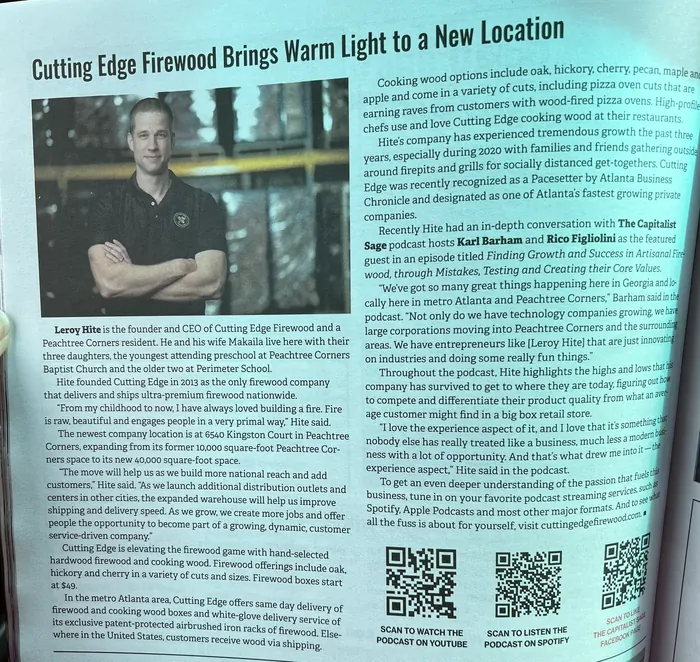
Peachtree Corners Magazine on the company's new location, 2021.
10 · 2019–20
4× in one year
Cutting Edge had been investing in search engine optimization, and it worked almost too well. When people anywhere in the country searched for firewood, Cutting Edge came up. The phone kept ringing with orders from Indiana, California, Oregon, and New York that Leroy had to turn away. In 2019 he decided to try shipping, even though he didn't expect it to work. Cutting Edge started sending boxes of firewood and cooking wood (wood for grilling, smoking, and pizza ovens) nationwide. It also shipped an “ultimate package” of five racks that arrived with its own hand truck. Freight companies weren't known for their customer service, so each shipment came with a box of hickory and a note apologizing in advance. Customers loved it. Before long, cooking wood made up about 20% of revenue, and about half of revenue came from outside Georgia.
Back in Atlanta, Leroy started putting Cutting Edge yard signs in front of customers' homes. For years, when he told people at networking events that he owned a firewood company, they changed the subject to the weather or sports. A few months after the signs went up, people started asking, “Is that the company with the yard signs everywhere?” When new customers were asked how they'd heard of Cutting Edge, nine out of ten mentioned the signs.
Then came 2020 and COVID. Leroy bought wood far in advance, had his suppliers build up stock, doubled the warehouse space, and hired and trained delivery artisans and customer service staff ahead of demand. Between shipping and COVID, Cutting Edge grew 4× in a single year, and it could have grown even more if it had been able to keep up. Atlanta Business Chronicle named it one of the city's fastest-growing companies in 2021 and 2022.
At home with his four daughters.
11 · 2021–23
The hardest chapter
With the company growing that fast, Leroy decided it was time to bring in experienced people to help him scale. A business mentor he trusted was restructuring his own company, so the mentor's COO came over to help run Cutting Edge. The COO brought in a leadership team: a director of operations, a part-time CFO, a part-time CMO, and a head of customer service. Only one of them worked out. The rest weren't willing to learn the business from the ground up by doing deliveries, taking phone orders, or working in the warehouse. They pushed back on the things that had made Cutting Edge successful, including the yard signs. Before they arrived, the company was on pace to double again in 2021. Instead, it grew a little less than 50%, and overhead ballooned.
Then the mentor advised Leroy to take out a bridge loan, a large, short-term loan meant to carry a company until new investors come in. He said he had investors lined up, and the COO supported the plan. Leroy trusted them and took a seven-figure loan due in two months. When the two months were up, no investors came. The loan went into default, which meant nearly all of Cutting Edge's cash went to paying it down. That put the company at risk of missing payments on its SBA loan, a government-backed small business loan secured by a lien on Leroy's family home.
A few months later, in April, Leroy's fourth daughter was born. When he came back to work, the mentor and the COO called him into a meeting with an offer: they would let him keep his house if he signed the company over to them. He had only a couple of weeks of cash left to make payroll. Leroy asked for 48 hours. He went home, prayed, and made a Hail Mary call to a customer he knew was wealthy. That customer had sold a business of his own and was starting a family office, a firm that invests one family's money. He came in as an investor, the bridge loan was paid off, and Leroy kept his company. He rebuilt the leadership team and made Cutting Edge profitable again.
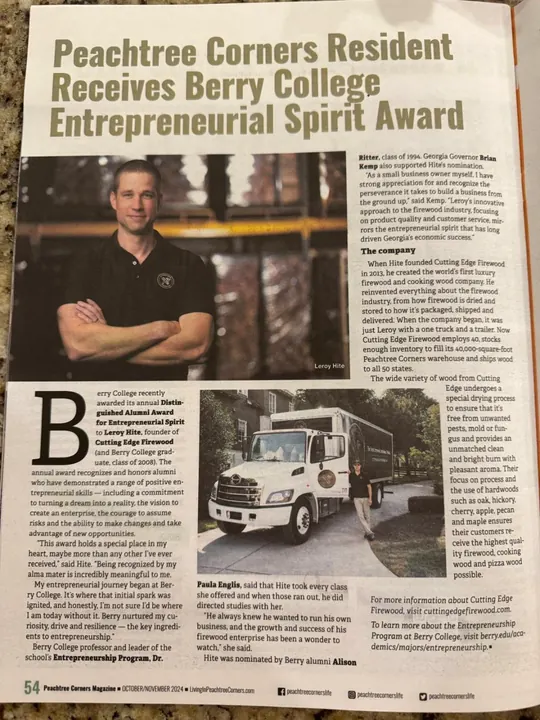
Peachtree Corners Magazine on his Berry College award, 2024.
12 · 2024
The exit
With Cutting Edge stable and profitable again, Leroy started thinking about what was next. Firewood is a hard product to scale, and after eleven years he wanted to go build bigger things. In 2024, he sold Cutting Edge Firewood to the investor who had come in the year before. By then, the company he started with one pickup truck and a trailer had been featured on the Today Show, Fox & Friends, and Netflix. It had served celebrities, billionaires, and Fortune 500 CEOs, and its firewood had burned in the Oval Office. It had also inspired hundreds of imitators. That same year, Berry College, where his first firewood venture started, gave him its Entrepreneurial Spirit Award.
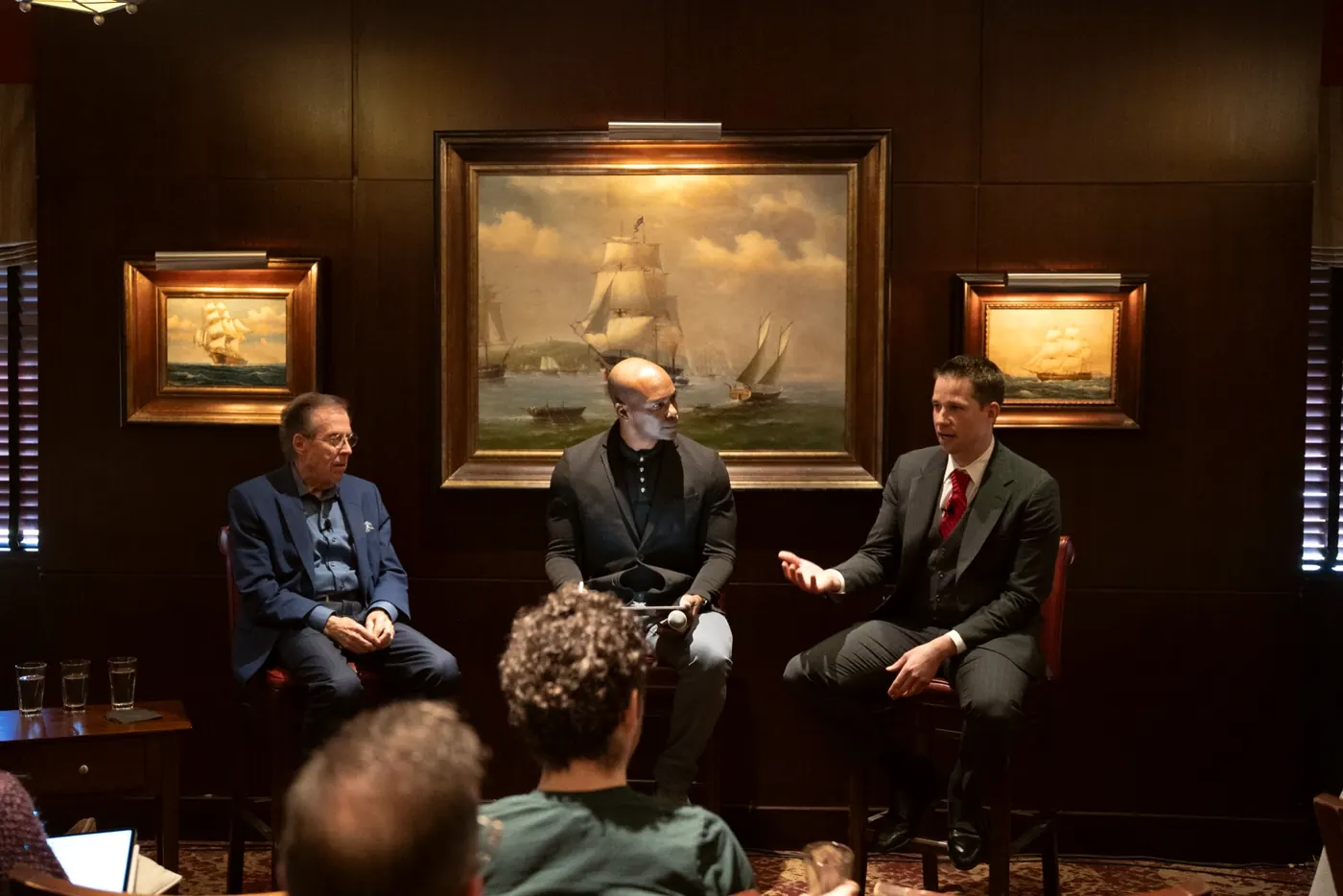
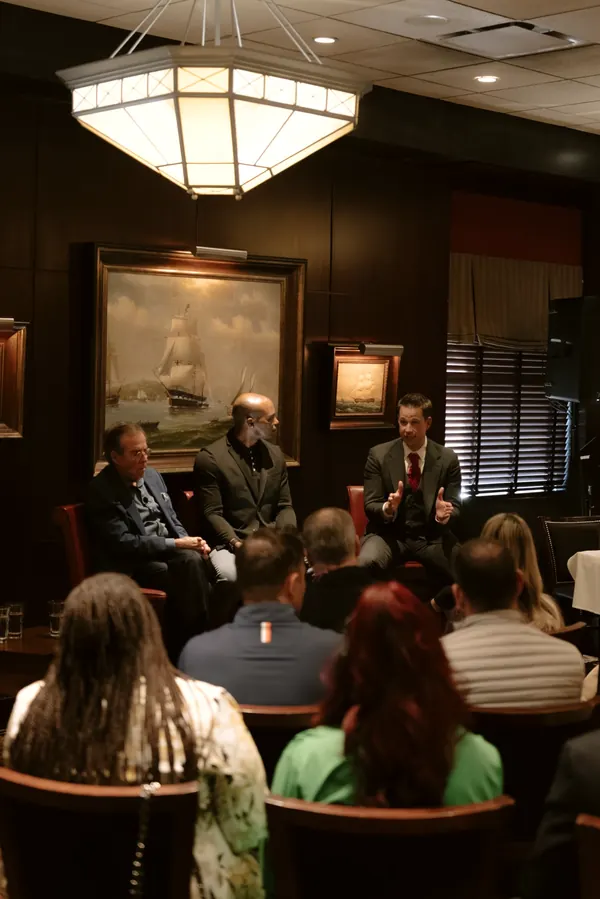
Hosting Ritz-Carlton co-founder Horst Schulze for a fireside chat, 2026.
13 · Now
Building again
Since the exit, Leroy has shared his story with college students, business owners, and executives. In 2026, he hosted Ritz-Carlton co-founder Horst Schulze, who had been a Cutting Edge customer, for a fireside chat. Now he's building his next company. It's in stealth for now, and it runs on the same playbook that built Cutting Edge: find the thing everyone else has settled for, then set a standard nobody can follow.
Leroy calls it Customer Joy: product quality, customer service, and branding, obsessed over in equal measure. Take one leg away and the whole thing falls over.
i.
Product
Kiln-dried for at least 48 hours at 250°F. Hand-picked piece by piece, so there's no rot and no bugs. Fire starters and matches included, packed in boxes customers compared to Apple's.
ii.
Service
Delivery artisans in pressed polos who put the wood wherever the customer wanted it: up three flights of stairs, into an upstairs bedroom, onto a rooftop. One client said it felt like the Ritz-Carlton came to my home.
iii.
Brand
Never a discount. Yard signs in front of Atlanta's best homes until the logo meant something. Prices 10 to 150 times the industry standard, and customers loved it more.
“
I felt less like I was receiving firewood and more like I was receiving the delivery of a Rolls-Royce.
A Cutting Edge customer, in a message to Leroy
The Oval Office
His firewood burned behind two presidents.
Cutting Edge Firewood was used in the Oval Office across two administrations.
Noticed
The people who know luxury noticed.
The co-founder of the Ritz-Carlton
Horst Schulze called to compliment the customer service. In 2026, Leroy hosted him for a fireside chat.
Chick-fil-A executives
told him Cutting Edge nailed customer service.
Coca-Cola executives
told him it nailed the branding.
The chairman of a $60 billion company
wrote him a six-paragraph email about the pizza wood.
Terry Bradshaw, Thomas Rhett, Chris Daughtry, Walker Hayes
Customers who endorsed the brand publicly. Plenty of other famous names bought quietly.
Billionaires, Fortune 500 CEOs, politicians
were customers, too.
Speaking
Fireside chats that move rooms.
His favorite format: a short version of the story, then an unscripted conversation built around the questions your audience actually came to ask.
Leroy speaks to entrepreneurs, executives, universities, and faith communities about category creation, customer experience, pricing, leadership, and grit. Audiences get the whole story, including the parts most founders leave out.
01
Burn the Box
How creative thinking builds category-defining brands.
The full story of turning a commodity into a luxury brand trusted by the Oval Office, and the thinking any team can use to find space nobody else is competing for.
Audiences leave with
A framework for breaking categories open
Tools for bold, practical ideas under pressure
A blueprint for turning overlooked opportunities into premium products
02
Grit Over Easy
Leading yourself and your team through discomfort.
From $12 in the bank to a nationally recognized brand: why discomfort became his biggest competitive advantage, and how to make it yours.
Audiences leave with
A mindset that runs toward challenges, not away from them
A system for staying disciplined when everything is uncertain
Practices that build long-term mental toughness
03
The Standard Is the Strategy
Customer experience, premium pricing, and the details that create value.
What earned a call from the co-founder of the Ritz-Carlton, why Leroy never ran a discount, and how healthy margins turned into a valuable exit.
Audiences leave with
The three legs of Customer Joy, and how to build each one
How price tells a story before your marketing says a word
What exit-ready looks like from someone who lived it
Most requested
Fireside chat
A 10 to 15 minute version of the story, then conversation and audience Q&A.
Full stage
Keynote
45 minutes plus Q&A, tailored to your audience and theme.
For the right rooms
Workshop & panel
Working sessions and panel conversations on brand, pricing, and customer experience.
Clemson UniversityThe Horst Schulze fireside, 2026A fireside chat for business ownersUnscripted, as alwaysWith Horst Schulze and Trey McKnightAfter the room cleared, with Makaila
Stages
Berry College
Clemson University
XPX Atlanta
EO Georgia
ASCM Atlanta
PCBA
Rotary Club of Roswell Jan 2027
“If you want a founder or speaker who has lived the full journey of starting, growing, and exiting a business, and who can talk in concrete terms about how customer experience and pricing strategy create value, I am glad to recommend Leroy.”
John RayAuthor of The Generosity Mindset®. Heard Leroy speak at XPX Atlanta.
“Most speakers only show the success. I appreciate you showing the actual cost and the misery that comes before the breakthrough.”
Juan V.Berry College, Class of 2022. Heard Leroy speak his senior year.
“Leroy's ability to disrupt the norm and set new standards in an industry as timeless as firewood is nothing short of remarkable.”
Leroy is building his next company. It's in stealth, so the details stay quiet for now. Join the list and you'll hear it first, before it's public.
One email when it launches, plus the occasional hard-won lesson. No spam.
Status
In stealth
Name
Launch
Get in touch
Let's talk.
Speaking and fireside chats, media and podcasts, partnerships and investing, or a good conversation about building something. Tell Leroy what you have in mind.
Leroy lives outside Atlanta with his wife, Makaila, and their four daughters. He serves on Berry College's Board of Visitors.